Key takeaways
- There is no Shinkansen station in Hakone. The bullet train stops at Odawara, and the last leg is the Hakone Tozan Line: ¥360, about 14 minutes. Every route from Tokyo, compared.
- The Romancecar costs ¥2,470 from Shinjuku, direct and seated, against about ¥3,640 for the Shinkansen route with its change at Odawara. Cheaper and more direct, and only marginally slower — the head-to-head.
- There is no 1-day Hakone Freepass. The shortest version is two days at ¥7,100, so a day tripper pays for validity they will never use. The arithmetic, including the legs we could not price.
- The last ropeway leaves at 16:45 from February to November, and 16:15 in December and January. A one-day plan is really just that time counted backwards.
- The ropeway on its own is ¥2,000 one way for an adult, ¥3,000 return. That is the operator’s own fare, not a resale. What it buys and when it shuts.
- Wind and fog close the ropeway and the cruise. One of our own reviewers lost both in a day, so check live status before you build a plan around them. The loop, leg by leg.
What the choice really costs
What the ¥7,100 Freepass actually covers
The pass is sold at Odakyu’s own price, so the question is never the markup. It is what falls inside the cover and what does not.
Inside the pass
- Round-trip Odakyu Line, Shinjuku to Odawara, on ordinary trains
- Hakone Tozan Train and the Hakone Tozan Cable Car
- The Hakone Ropeway and the Hakone Sightseeing Cruise
- Hakone Tozan Bus, the KANKO SHISETSU-MEGURI sightseeing bus, Odakyu Highway Bus and Tokai Bus in designated areas
- Discounts at 70+ sightseeing facilities
Outside the pass
- The Romancecar surcharge, ¥1,200 adult and ¥600 child, each way
- A one-day option — there is not one. Two days at ¥7,100 is the shortest sold; three days costs ¥7,500
- Meals, entrance fees at anything the pass only discounts
- Any guarantee that the ropeway or the cruise will run on your day
The Hakone Loop, in the order you ride it
One circuit, five kinds of transport, and the reason people come here for a day rather than a walk.
The loop runs in either direction and the Freepass covers every leg of it. Below is the usual order, anticlockwise from Hakone-Yumoto. Where we could confirm a fare it is printed; where we could not, the line says so.
- Hakone-Yumoto — The gateway station, where the Odakyu line hands you over to the Hakone Tozan Railway.
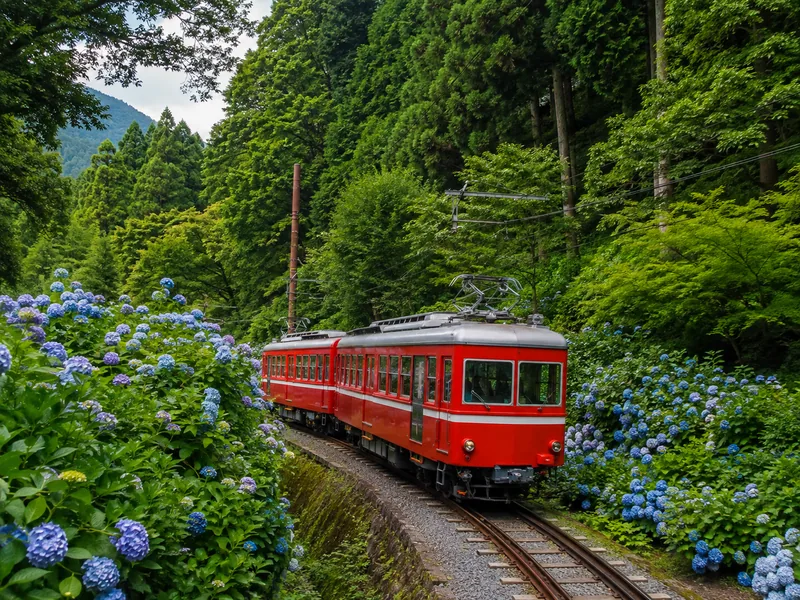
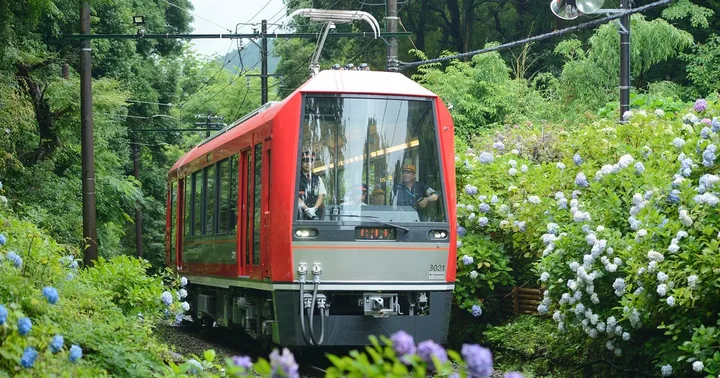
- Tozan switchback train to Gora — ¥460 and roughly 35 minutes of reversing up the mountainside. Hydrangeas line the track in early summer, which is why this leg is worth riding rather than skipping.
- Cable car to Sounzan — The funicular climb from Gora to the foot of the ropeway. We could not verify this fare from any source, so we do not quote one.
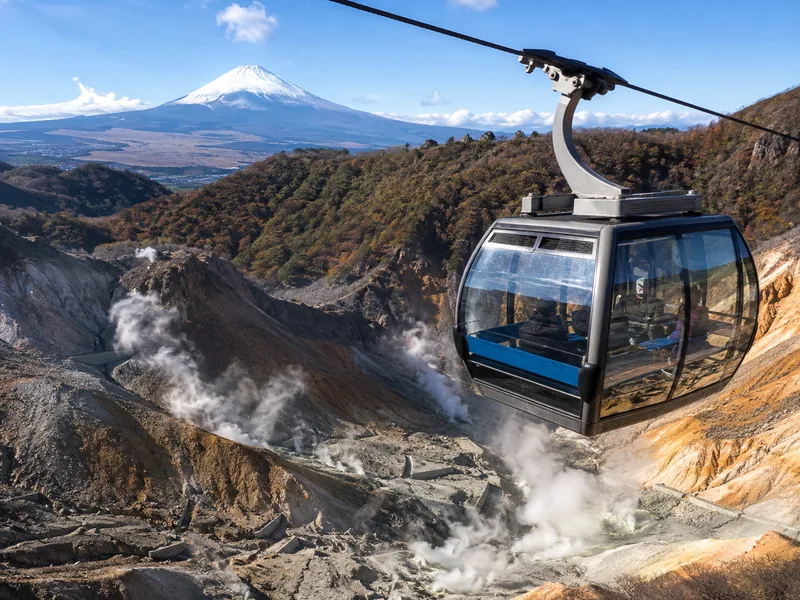
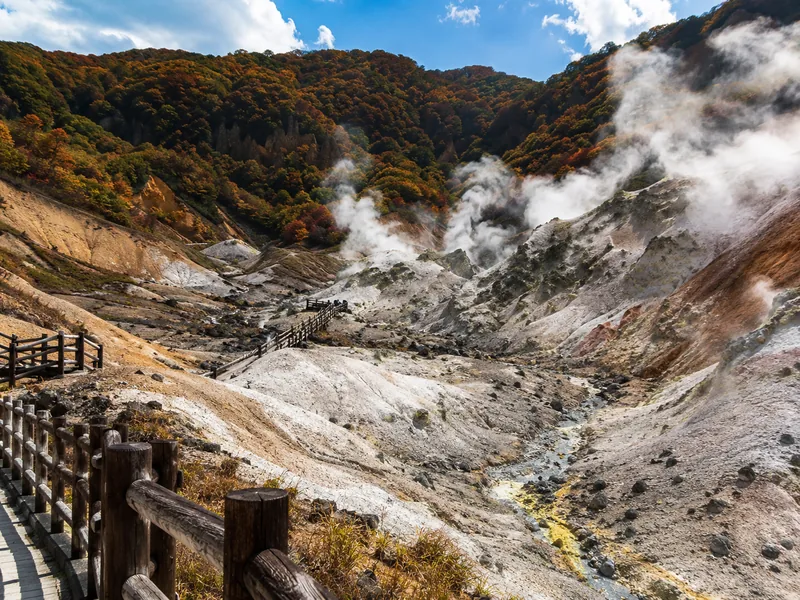
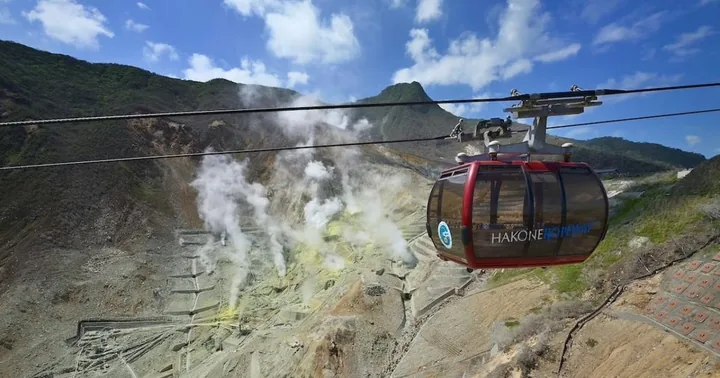
- Ropeway over Owakudani — ¥2,000 one way for an adult. Four stations, a live geothermal valley of sulphur vents below you, black eggs boiled in the springs at the top, and a service that suspends in high wind.
- Togendai — The ropeway’s lake-side terminus and the pier for the sightseeing cruise.
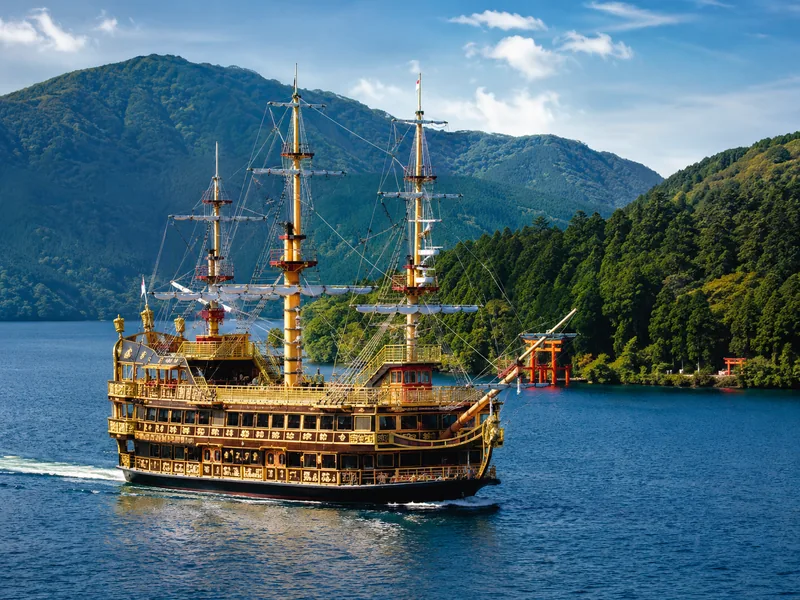
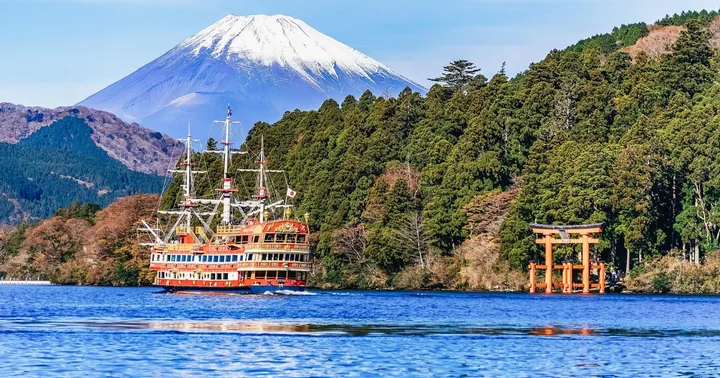
- Lake Ashi cruise to Motohakone — ¥1,700 adult one way. In heavy fog or strong wind it changes route or does not sail at all.
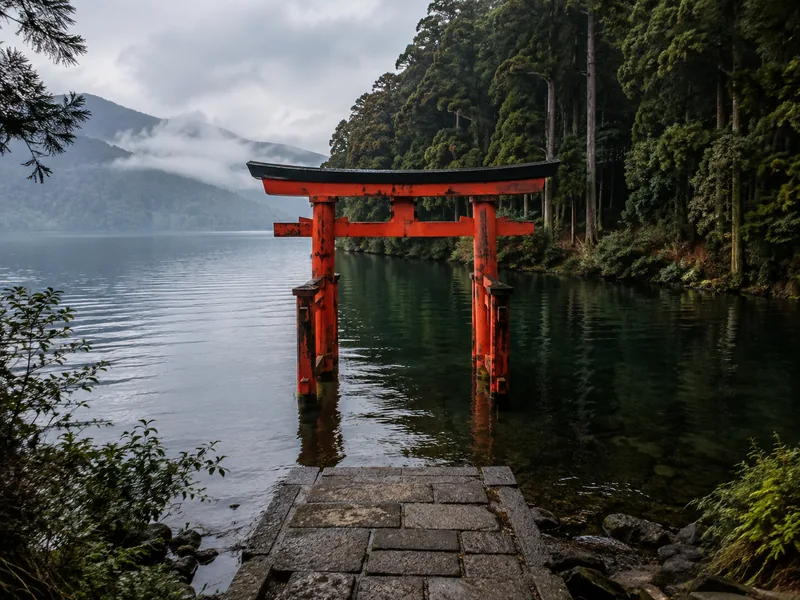
- The lake torii at Hakone Shrine — Hakone Shrine’s vermilion torii stands in the water at Motohakone, a short walk from the pier.
- Bus back to Hakone-Yumoto — The leg that closes the circuit. Bus fares in Hakone are the other thing we could not verify, so there is no figure here either.
Ridden straight through, that circuit is the day. The binding constraint is not distance but the ropeway’s last run: 16:45 from February to November, 16:15 in December and January. Read the loop leg by leg, or work from an hour-by-hour day built backwards from that closing time.
How to actually book this
Decide who is driving
Your own feet and a rail pass, or a coach seat and a guide. Nothing else changes the shape of the day as much.
Check the mountain before the calendar
The ropeway and the cruise both stop in bad weather. Live status is posted at hakonenavi.jp.
Book the early start
Every coach tour here leaves Tokyo between 7:30 and 8:00 AM and runs 8 to 11 hours. There is no late-start version of this trip.
Turn up with the right piece of paper
Freepass vouchers are collected at the Odakyu Sightseeing Service Center, Shinjuku West, B1 of the Odakyu Line station in front of the ticket gate, open 8:00 to 18:00. The ropeway e-ticket needs no exchange.
The Hakone day tour most people end up booking
If you want one booking that covers the coach out of Tokyo, a guide and the ropeway, this is the one with the longest queue behind it. Read the cruise line in the comparison below before you commit.
The pass, the popular coach tour, or the all-inclusive one?
Three genuinely different days. The rows that matter are the last three, because that is where the advertised price stops telling the whole story.
| Hakone: Train Pass with Unlimited Rides & Activity Discounts | Most bookedTokyo: Mt. Fuji Tour, Hakone Ropeway, Owakudani, Lake Ashi | Tokyo Mt Fuji 5th St & Hakone Cruise Bus Tour w/Bullet Train | |
|---|---|---|---|
| Price | ¥7,100 | ¥8,640 | ¥24,000 |
| What it is | A 2-day transport pass | 10-hour coach tour | 10-hour coach tour |
| Rating | 4.2 · 169 reviews | 4.7 · 7,661 reviews | 4.4 · 5,303 reviews |
| Leaves Tokyo from | Shinjuku, your own timetable | Tokyo Station 7:30 or Shinjuku 8:00 | Matsuya Ginza or the LOVE statue, Shinjuku |
| Guide | None — you plan it | Multilingual guide | English guide, audio in six more languages |
| Ropeway included | Yes, unlimited rides | One way only | Yes |
| Return by bullet train | No | No | Yes, Odawara to Tokyo, about 40 min |
| Lake Ashi cruise included | Yes, covered by the pass | No (about ¥1,700 extra) | Yes |
| View → | Book this → | View → |
Photo Gallery
Hakone, in roughly the order you meet it
Six things a day on the loop puts in front of you.
Eight ways to do Hakone, cheapest first
Six of these are Mt. Fuji tours that call at Hakone on the way, which is what the market actually sells. The two purely Hakone products are the pass and the ropeway ticket, and both are the operator’s own face value with nothing added.
 Cheapest way in
Hakone: Hakone Ropeway One-Way / Round-Trip E-Ticket
 Do it yourself
Hakone: Train Pass with Unlimited Rides & Activity Discounts
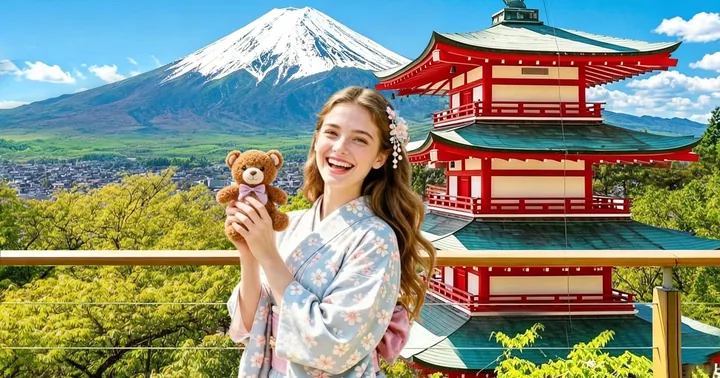 Best ratedRopeway ticket included
Mt. Fuji & Hakone Tour: Arakurayama, OshinoHakkai, Owakudani
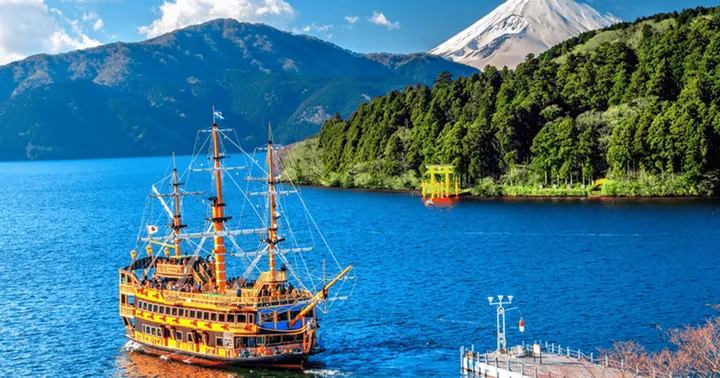 Most bookedRopeway one-way included
Tokyo: Mt. Fuji Tour, Hakone Ropeway, Owakudani, Lake Ashi
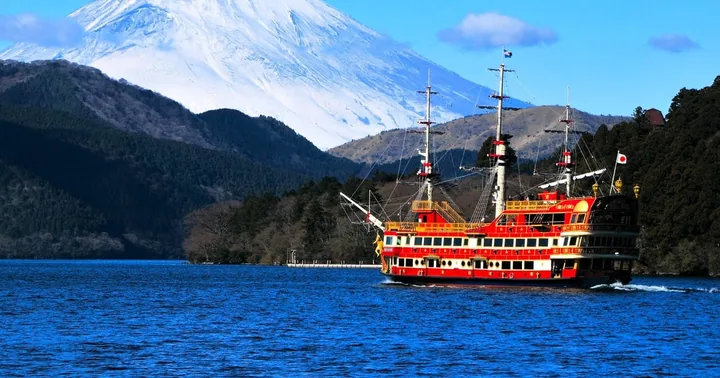 Cruise + cable carRopeway + cruise included
Tokyo: Mt. Fuji and Hakone Tour with Cable Car and Cruise
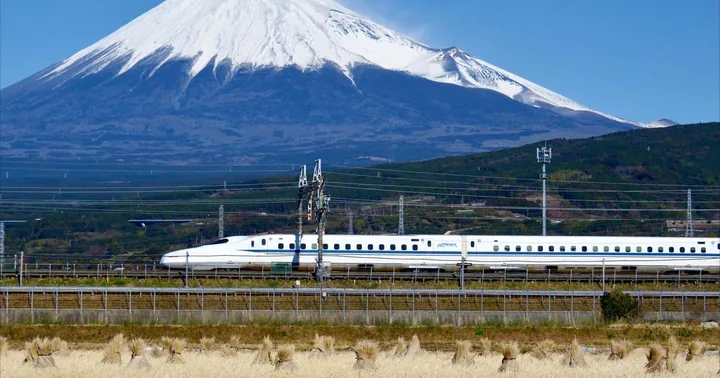 Shinkansen homeRopeway, cruise & Shinkansen
From Tokyo: Mt. Fuji & Hakone Tour w/ Return by Bullet Train
 All-inclusiveRopeway, cruise, lunch & Shinkansen
Tokyo Mt Fuji 5th St & Hakone Cruise Bus Tour w/Bullet Train
 Private, from your hotel
Hakone Private Tour: Bespoke Day from Your Hotel
What travellers actually wrote
Straight from GetYourGuide, including the ones that are not flattering. Nothing here has been reworded.
The day we arrived was raining and windy and the cruise and ropeway were out of action and I almost cancelled.
Just beware bus routes are Alphabetic but signs are numeric.
Tokyo traffic pushed back the schedule and made it a long day.
Too bad there was so much traffic that we missed the cable car experience.
Belle is exceptionally organised and made sure that everyone knew exactly what was happening, regardless the language spoken.
Started early to miss the ‘tour bus enmasse’
Ratings and reviews are the operators’ live GetYourGuide figures. Read our full tour reviews ›
Four things people get wrong before they set off
These are the questions I answer most often on the platform at Hakone-Yumoto, usually to someone who has already paid for the wrong ticket.
Which train, honestly?
The Romancecar, unless you are already holding a rail pass that makes the Shinkansen free. It is ¥2,470 against about ¥3,640, it is seated, and it does not make you change at Odawara. The full comparison is on Romancecar vs Shinkansen.
Freepass or single tickets?
Counting only the legs we could verify, a day on individual tickets comes to about ¥6,700 against a ¥7,100 pass, and two real legs of the loop are missing from that total because we could not price them. So the pass is roughly break-even for a full day of riding and behind for a half day. The three ways a day adds up.
What happens if the weather turns?
The ropeway suspends in high wind and the cruise reroutes or stops in heavy fog. There is no refund logic that gives you the day back, so check the forecast before you buy a pass rather than after.
Is one day genuinely enough?
For the loop, yes, if you are on an early train. For an unhurried onsen afternoon on top of it, no. Why the 16:45 ropeway decides it.
Can’t make these dates?
Browse more available Hakone day trips and find one that fits your schedule — all with instant confirmation and free cancellation.
Hakone, explained
Hakone is a mountain and lake district in Kanagawa with no Shinkansen station of its own, reached from Tokyo in about 75 to 90 minutes by the Odakyu Romancecar from Shinjuku to Hakone-Yumoto for ¥2,470, and toured as a single loop of switchback railway, cable car, ropeway and lake cruise that has to finish before the ropeway’s last run at 16:45.
I live two minutes from Hakone-Yumoto Station and have spent nine years watching people arrive having paid for the wrong ticket. Everything else here follows from the two corrections below.
The train that does not go here
Search for a bullet train to Hakone and you will find prices, journey times and a great deal of confident writing. None of it describes a real service. The Shinkansen stops at Odawara — Kodama and some Hikari trains, never Nozomi — and Odawara is not Hakone. From there you change onto the Hakone Tozan Line for ¥360 and about 14 minutes to reach Hakone-Yumoto. Counting the run out from Tokyo at roughly 27 to 40 minutes depending on the service, and ¥3,280 unreserved or ¥3,610 with a seat, you land at about ¥3,640 and one change.
The Odakyu Romancecar leaves Shinjuku and stops at Hakone-Yumoto. No change, a reserved seat, a ¥1,270 base fare plus a ¥1,200 limited-express surcharge, so ¥2,470. It is cheaper and more direct than the Shinkansen route and only marginally slower. If money is tighter than time, ordinary Odakyu trains run the same corridor for ¥1,270 in about two hours, usually changing at Odawara. On frequency I will only say roughly one to two Romancecars an hour, more at peak, because I cannot verify a timetable.
What the loop physically is
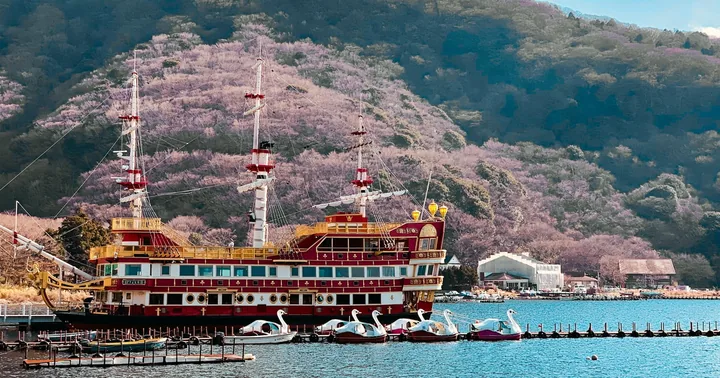
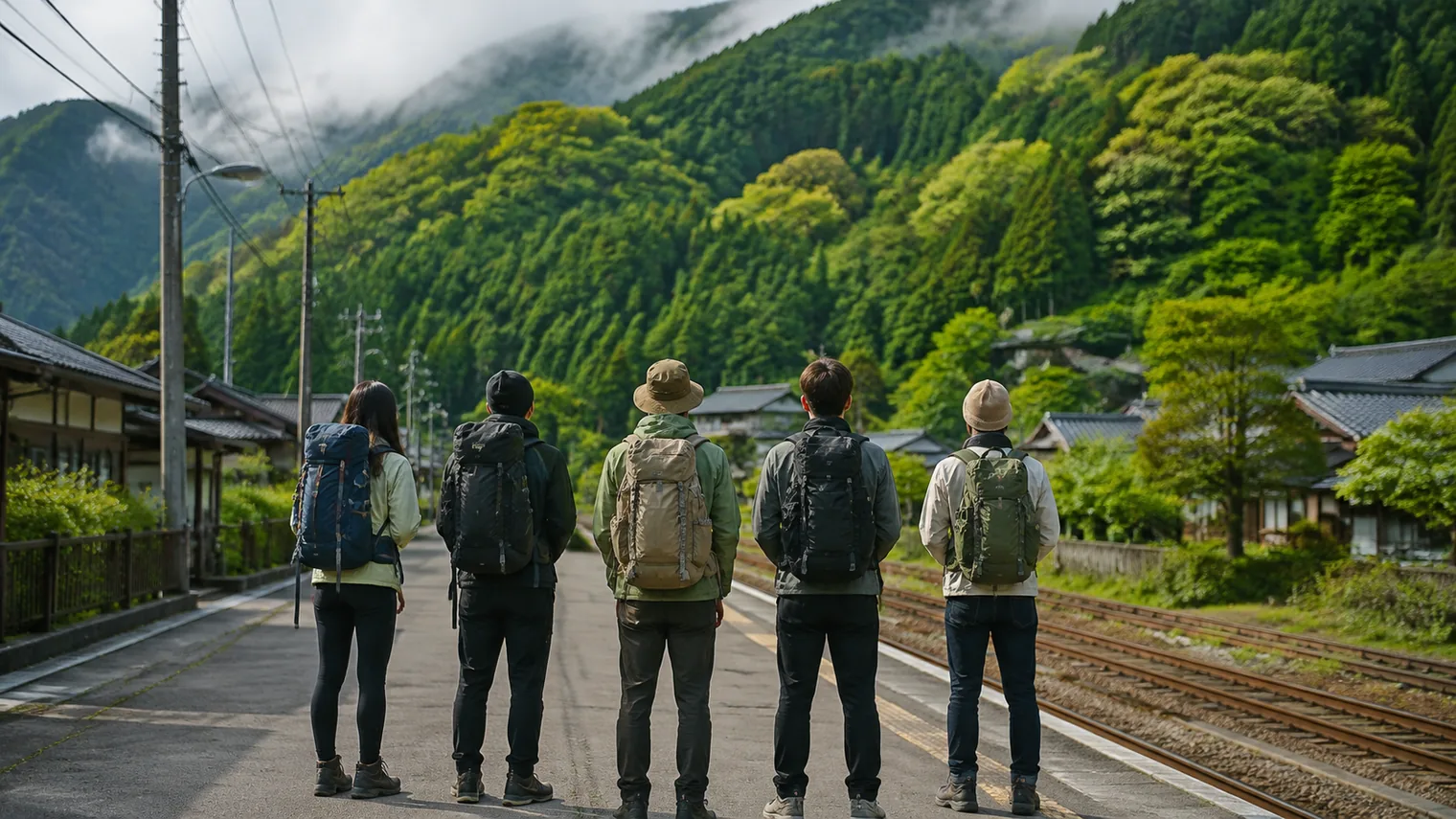
People say “the Hakone Loop” as though it were a walking route. It is a chain of five different vehicles. From Hakone-Yumoto you take the Tozan switchback train up to Gora, ¥460 and about 35 minutes of the train reversing its way up the hillside, with hydrangeas along the track in early summer. At Gora a cable car climbs to Sounzan. From Sounzan the ropeway crosses over Owakudani, a live geothermal valley of sulphur vents where the local speciality is eggs boiled black in the springs, and drops you at Togendai on Lake Ashi: ¥2,000 one way for an adult, ¥3,000 return. The sightseeing cruise then takes you down the lake to Motohakone or Hakonemachi for ¥1,700, past the point where Hakone Shrine’s vermilion torii stands in the water. A bus closes the circuit back to Hakone-Yumoto.
That is the whole thing: transport as the attraction, which is either the appeal or the objection.
Why the early start decides the day
Hakone shuts earlier than its daylight. Most attractions and transport wind down between about 16:30 and 17:00, and the ropeway’s own last runs are 16:45 from February to November and 16:15 in December and January. Miss those and the loop breaks in the middle, at altitude, with the lake on the far side. Every coach tour sold from Tokyo leaves between 7:30 and 8:00 and runs 8 to 11 hours. That is not drama; it is the only shape the day has.
Does the Freepass pay for itself in a day?
First, the thing almost nobody writes down: there is no one-day Hakone Freepass. The shortest version sold from Shinjuku is two days, ¥7,100 adult and ¥1,600 child, with a three-day at ¥7,500. Prices rose on 1 October 2025, along with the ropeway and the cruise, so pages dated 2026 that quote ¥6,100 are simply stale. The Romancecar surcharge is not in the pass either: ¥1,200 adult, ¥600 child, each way.
So the honest question is whether one day of riding clears ¥7,100. Counting only the legs I could verify: ordinary Odakyu out ¥1,270, Tozan train to Gora ¥460, ropeway one way ¥2,000, cruise ¥1,700, ordinary Odakyu back ¥1,270. That is about ¥6,700 against a ¥7,100 pass. But I could not price the Gora to Sounzan cable car or the bus back around the lake, and both are real legs, so the true ticket total is higher than ¥6,700 by an amount I cannot give you. My conclusion, duller than the ones you will read elsewhere: for a single full day riding the whole loop the pass is roughly break-even and probably slightly ahead, and for a half day or a partial loop it is not. It would rank better if I invented the missing numbers. I am not going to.
The risk nobody prices in
The ropeway suspends in high wind. The cruise changes route or does not sail in heavy fog or strong wind. One traveller who reviewed the pass arrived to find both out of action and nearly cancelled the trip; the next day was calm and the day worked. The ropeway also takes scheduled maintenance closures in winter, with substitute buses, and Hakone sits at Japan Meteorological Agency volcanic alert Level 1, which means normal caution and no entry restriction, though Owakudani has had temporary restrictions before. Check status rather than assume it. A day trip that depends on one clear day is a real risk, and any page that treats it as a footnote is selling you something.
How I would actually do it
Take the Romancecar out of Shinjuku early. If you intend to ride the full loop, buy the two-day pass and accept that you are paying for validity you will not use; the convenience of not queueing at five ticket machines covers the difference. If you only want the crossing over Owakudani, buy the ropeway ticket and nothing else. If the forecast is wind, move the day. And if managing five connections against a clock does not appeal, a coach tour hands the problem to a guide, at the cost of someone else’s schedule and time lost to Tokyo traffic, which the reviews mention more than anything else.
Frequently asked questions
How long is the bullet train from Tokyo to Hakone?
There is no bullet train to Hakone, because Hakone has no Shinkansen station. The nearest one is Odawara: Kodama and some Hikari services stop there, Nozomi does not, and the run from Tokyo takes roughly 27 to 40 minutes depending on the service. From Odawara you change onto the Hakone Tozan Line for Hakone-Yumoto, ¥360 and about 14 minutes. Every route from Tokyo, side by side.
How much is the bullet train from Tokyo to Hakone?
Tokyo to Odawara unreserved is ¥3,280 (a ¥1,520 base fare plus a ¥1,760 unreserved limited-express charge), or ¥3,610 with a reserved seat. Add the ¥360 Tozan Line leg and you are at about ¥3,640 to reach Hakone-Yumoto, with a change in the middle. The Romancecar does it direct for ¥2,470 — the arithmetic, both ways.
Is there a direct train from Tokyo to Hakone?
Yes. The Odakyu Romancecar runs from Shinjuku straight through to Hakone-Yumoto in about 75 to 90 minutes, all seats reserved: a ¥1,270 base fare plus a ¥1,200 limited-express surcharge, ¥2,470 in total. Roughly one to two trains an hour, more at peak, though treat that as a pattern rather than a timetable. Ordinary Odakyu trains cover the same ground for ¥1,270 in about two hours, usually with a change at Odawara.
Is the Hakone Freepass worth it for a one-day trip?
Start with the fact nobody mentions: there is no one-day version. The shortest pass sold from Shinjuku is two days at ¥7,100 adult, ¥1,600 child. Counting only the legs we could verify, a day on individual tickets runs to about ¥6,700, and the cable car and the bus back around the lake are missing from that because we could not price either. For a full day riding the whole loop the pass is roughly break-even and probably slightly ahead; for half a day it is not. The full working.
How much does it cost to ride the Hakone Ropeway?
Sounzan to Togendai is ¥2,000 one way for an adult and ¥700 for a child, or ¥3,000 and ¥1,000 return. Those are the fares set at the 1 October 2025 revision, when the old ¥1,500 and ¥2,500 prices went. Most pages online still quote the old ones. Fares, stations and seasonal hours.
Is one day enough for Hakone?
For the loop, yes, provided you are on an early train and not a late one. The ropeway’s last run is 16:45 from February to November and 16:15 in December and January, and most of Hakone winds down between about 16:30 and 17:00, so the day ends earlier than the daylight suggests. Why that closing time settles the question.
What happens if the weather is bad?
The ropeway suspends in high wind, and the Lake Ashi cruise changes route or stops sailing in heavy fog or strong wind. Both have happened to travellers who reviewed the products on this site. Check live status at hakonenavi.jp before you travel, and remember that the ropeway also takes scheduled maintenance closures in winter with substitute buses running instead. What that does to the loop.
Can I use a Suica card in Hakone?
Suica and other IC cards work on ordinary Odakyu and JR trains and on many buses, so they are worth having. They are not a substitute for the Hakone Freepass, which is a separate paper or QR product, and they do not cover the ropeway or the cruise. One card also cannot be shared between two people through a gate. The two jobs, separated.
Still have questions? Email us [email protected]